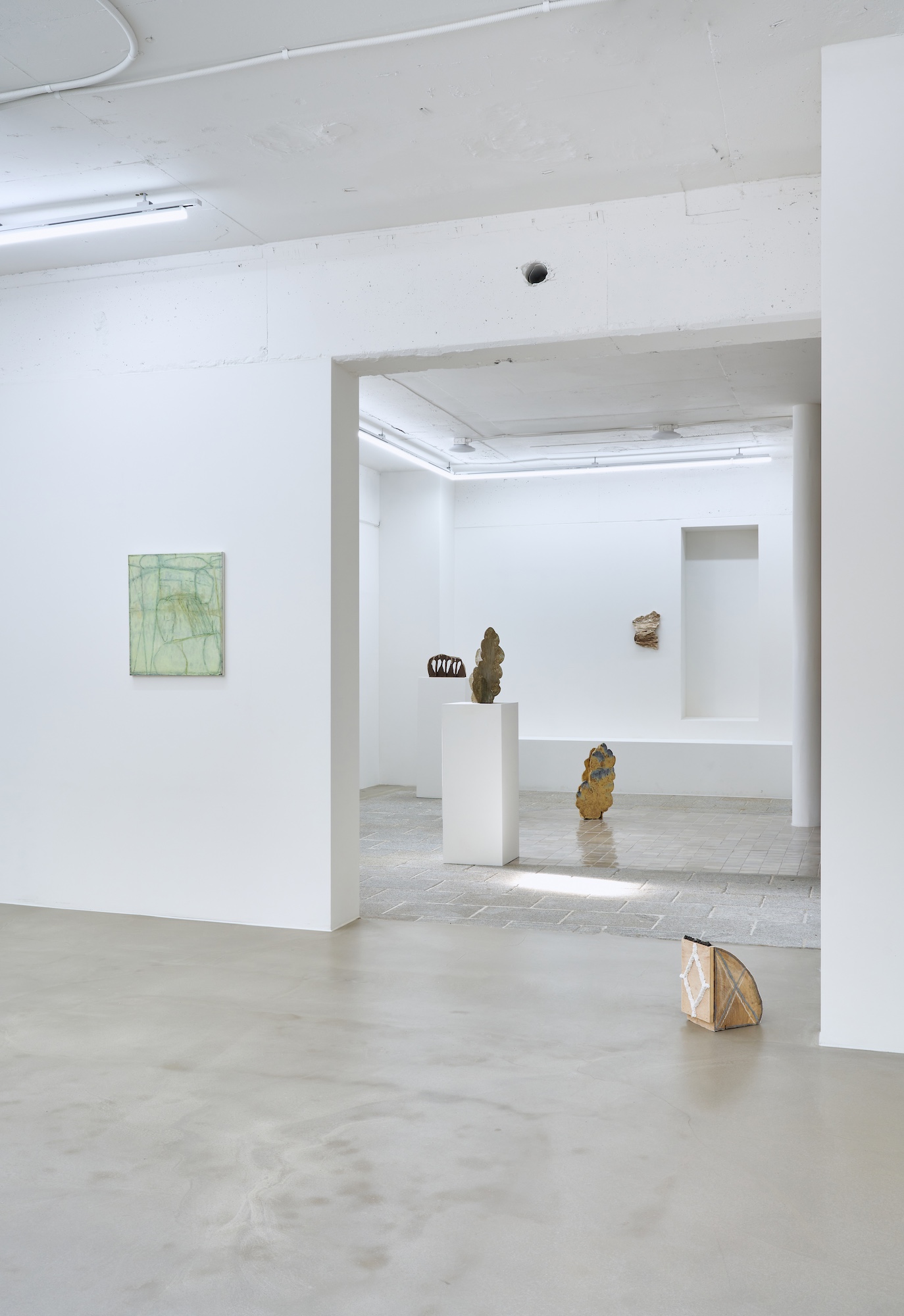

The inaugural exhibition of the Komplex, 《Curved Lines》, begins as an exploration of repeating lines and forms manifesting and encompassing the diverse materials and media presented in the works of four participating artists. These lines and forms undulate, wrinkle, sometimes converge into masses, intersect in grids, or connect in hesitation. Then where are these lines and forms coming from? In communication with the artists, it became evident that drawing plays a pivotal role in their practices, transcending its traditional role as a preparatory tool or a means to an end. As Seung-ho Kim stated in his article, The Value and Aesthetic Norm of Evaluation of Drawing in Contemporary Art (2016): “Drawing takes into consideration in between art and artworks. While an artwork is the result of intellectual activity, art itself does not exist as an entity but belongs among the human cognitive process.” Kim underscores drawing as an elemental, primordial form of creativity that not only catalyzes all other acts of creation but continually manifests the spirit of the artist throughout the process. Anchoring itself in this perspective, the exhibition seeks to explore the intrinsic nature, habits, thoughts, intentions, and attitudes of the artists, as revealed through their visual forms.
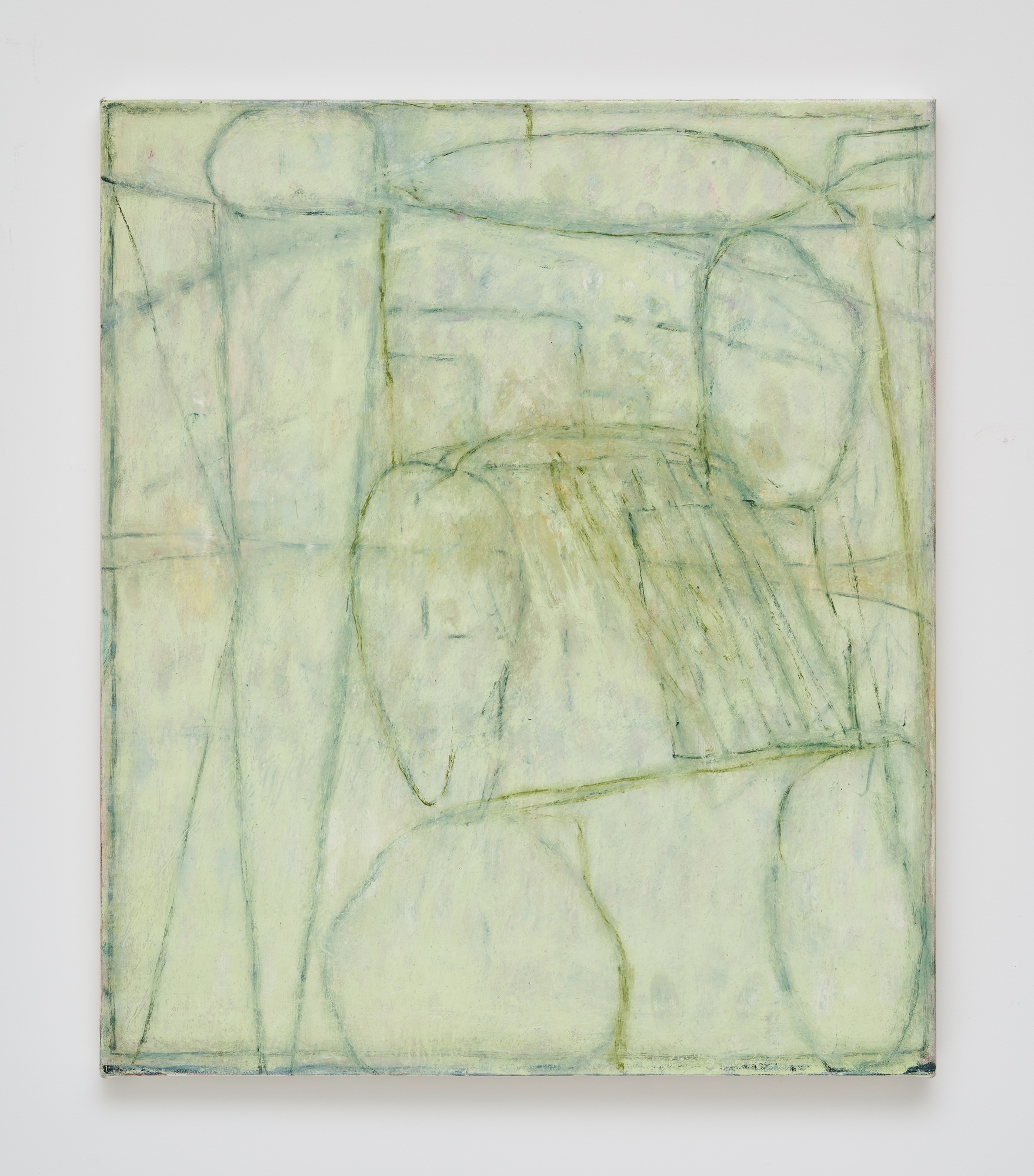
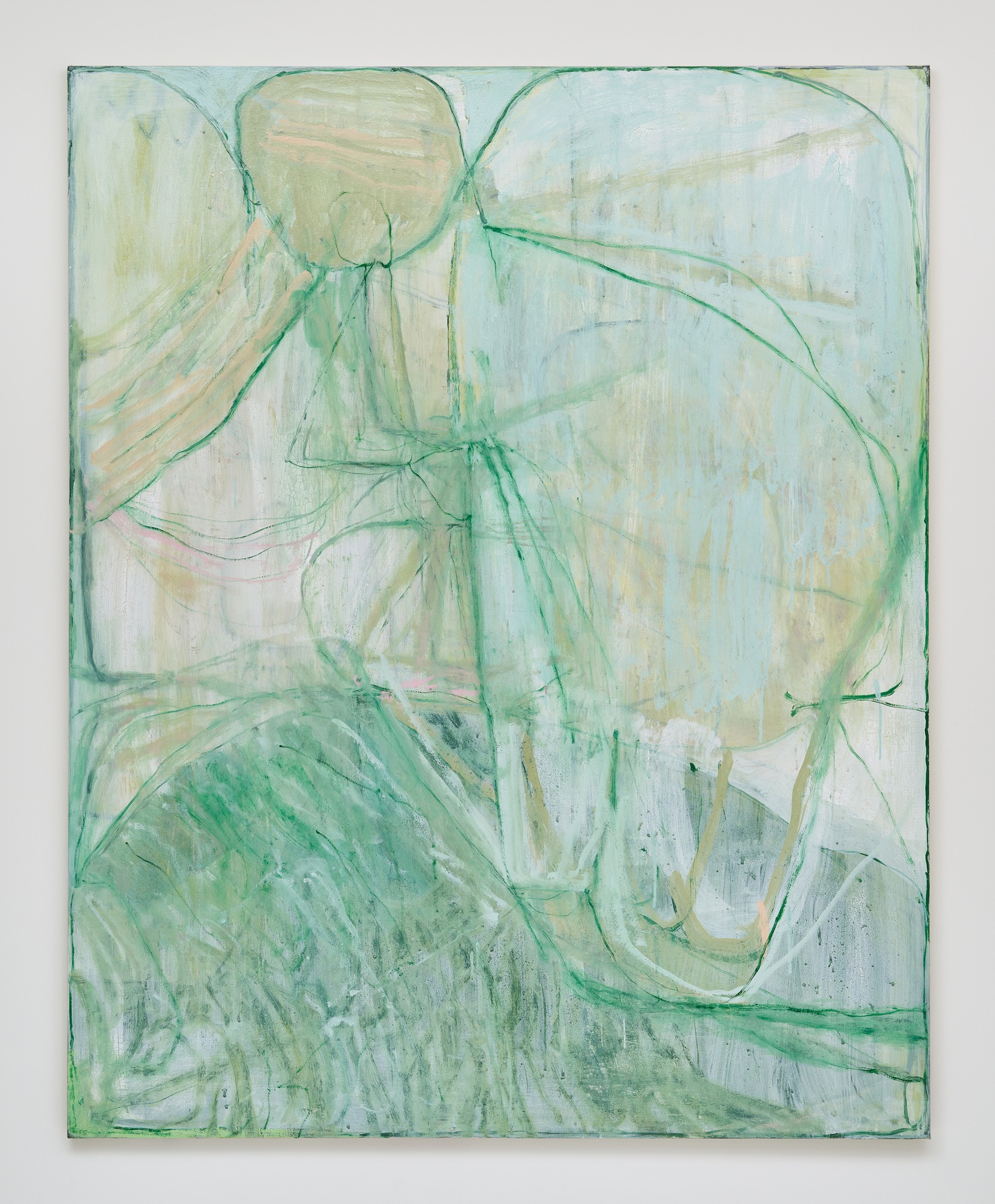
Noh-wan Park presents abstract paintings. The artist has long pursued figurative painting based on observed subjects, steadily developing and refining a unique painterly language of his own. Abstract painting was like a new step taken toward an unchanging goal. Even when fully committed to creating works where the depicted subject could be read with relative clarity, the artist’s unique surfaces—built through layers of watercolor mixed with arabic gum—often severed the subject from its original context. Despite this, the artist seemed to grapple with an inescapable passivity, rooted in the realization that his paintings were invariably shaped and exist in the relationship with some “subject.” Then, the artist made the decisive choice to exclude subjects entirely, aiming to create paintings that could stand independently. This was followed by an intense period of self-inquiry, rigorously questioning what would remain in their work once the subject was removed. Waiting for an unfamiliar newness to emerge on the canvas meant enduring the arduous process of incessantly drawing, erasing, layering, and smudging. Transferring the lines and forms sketched on paper onto the canvas, the artist persistently erased familiar shapes and colors that had long been embedded in his visual memories. The artist’s countless lines, which at times seem to fade away only to unexpectedly meet neighboring lines, part again, and eventually cut through surfaces to form shapes, reveal an insistent and unrelenting desire—one directed at the act of drawing itself, the self engaged in the act, and the boundless possibilities of painting.
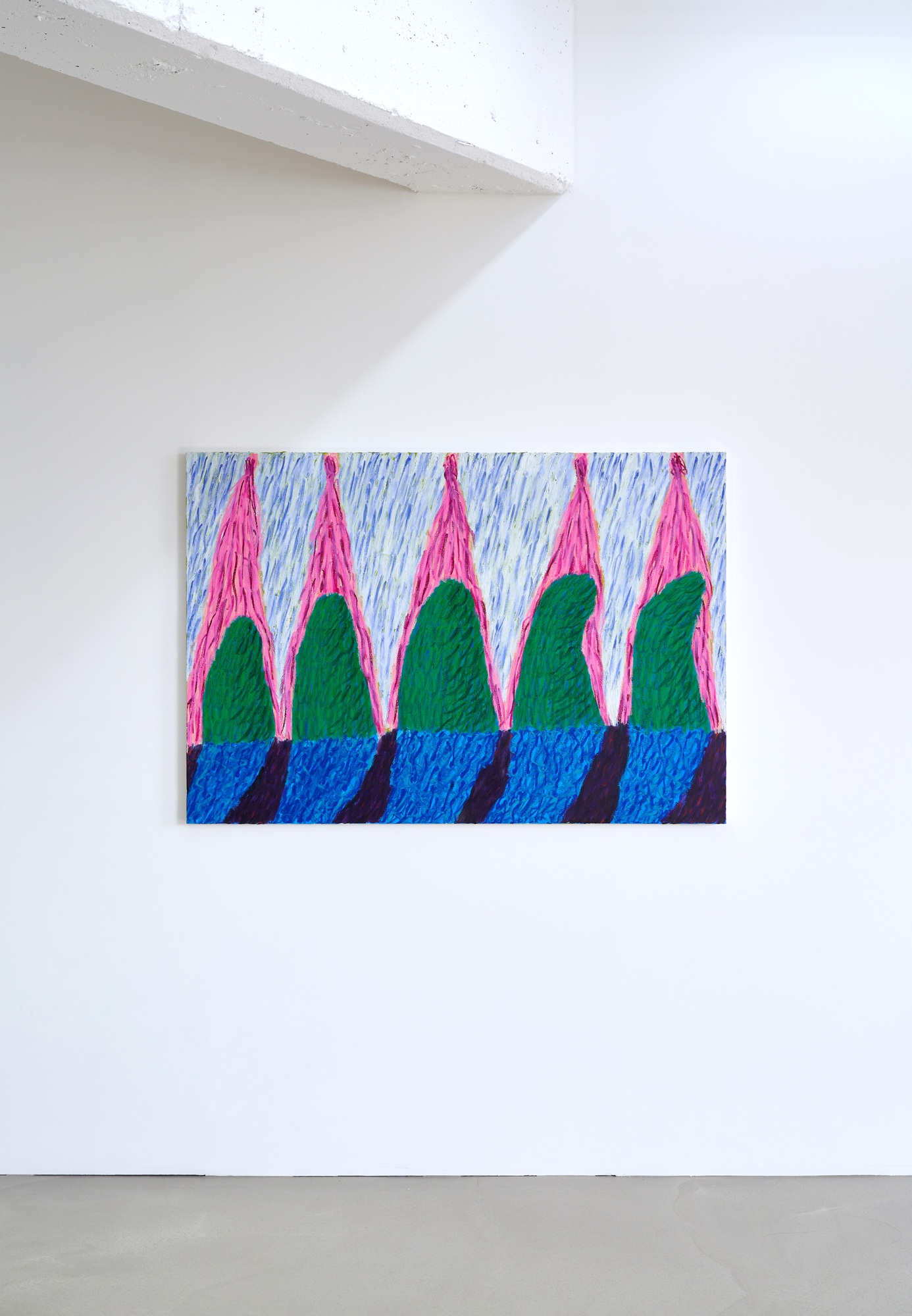
The works exhibited by Kyuhwa Moon are part of a series of paintings that the artist has intensely pursued over several months, reflecting and contemplating her own emotions and thoughts. “Even Water is Warm (2023)” captures the artist’s loathing for the scorching sunlight she encountered while walking one day; “Horn (2024)” conveys the sharpness that arose within her heart; “Where Is the Path (2023)?” expresses resistance to paths deemed as “correct answers”; and “Each One’s Light (2023)” explores the notion that, even under seemingly impartial sunlight, some still perceive shadows that refuse to dissipate. Dedicating herself into this series, the artist embarked on an unceasing journey inward, delving deeply into her own psyche. Breaking away from the habitual practice of finding subjects outside herself, the artist sought to create works that originated from within. In this process, drawing became the doorway through which she entered. Recently, the artist began to record her experiences, observations, emotions, and thoughts in written form. In this process, “sayings” are born, which are words or sentences, precisely organizing her emotions and thoughts. (The titles are sometimes created at this stage.) Recalling the “sayings born,” the artist begins drawing and then moves to her studio, where she determines the texture and thickness of the surface, the composition and density of colors, and the flow of lines and forms that the piece will embody. In addition, the artist has deliberately moved away from the familiar color palette she had long relied upon. With an experimental mindset, she deliberately excluded the comfortable colors she once relied on, testing whether her paintings could survive without them. In doing so, she embraced unfamiliar and previously overlooked hues. Through a deliberate embrace of intentional scarcity and a yearning for progression, the artist is approaching a form of painting that feels natural to her—one that she can genuinely call her own, in both subject and method.
For Eunyeoung Lee, sculptural art is an act of incarnation. It draws upon private experiences and memories, collective events shared by society, and issues that demand remembrance and reflection. This sculptural incarnation weaves together rhetorics, emotions, and questions arising from pending issues. For instance, the work installed on the second floor, “Peach Flowers Bloomed from a Broken Branch (2024),” is the artist’s response to the unilateral paradigms of urban development. Visiting the old city center of Cheongju where displacement and demolition are not special in life, the artist observed and touched the crumbling streets, walls, and windows. These encounters inspired her to imagine the bending lines and textured, irregular surfaces that would form her sculptural response. The artist seeks to speak in a gentle, roundabout tone rather than a sharp, direct one, using metaphor and implication. The events and stories the artist encounters are transformed through the artist into sculptural metaphors of “omission” and “concentration,” “sequence” and “overlap.” They deepen and crease, lean or protrude, flowing as colors that seep and lines that curve, ultimately carved into shapes that hang on walls or stand upright. Among these, “drawing” may represent the artist’s ultimate goal in sculpture—a primal line and shape achieved within oneself, embodying the artist’s true essence. It is a manifestation of their innate nature, attainable only by intentionally erasing, to a certain extent, the “sculptural” proficiency acquired through years of disciplined training. To this end, the artist moves fluidly between drawing and sculpture, free from fixed patterns of beginning or conclusion. Starting with drawing that transitions into sculpture, or returning to drawing while sculpting, the two forms continually inspire and propel each other. In this interplay, the artist shapes a flexible path that bridges and blends the boundaries between mediums. As the artist lays clay upon clay, extending lines and generating forms, the sculpture becomes a drawing in its own right. In this process, it becomes nearly impossible to define what comes first; the boundaries between drawing and other works of creation dissolve, guiding the work toward a space where distinctions fade away.
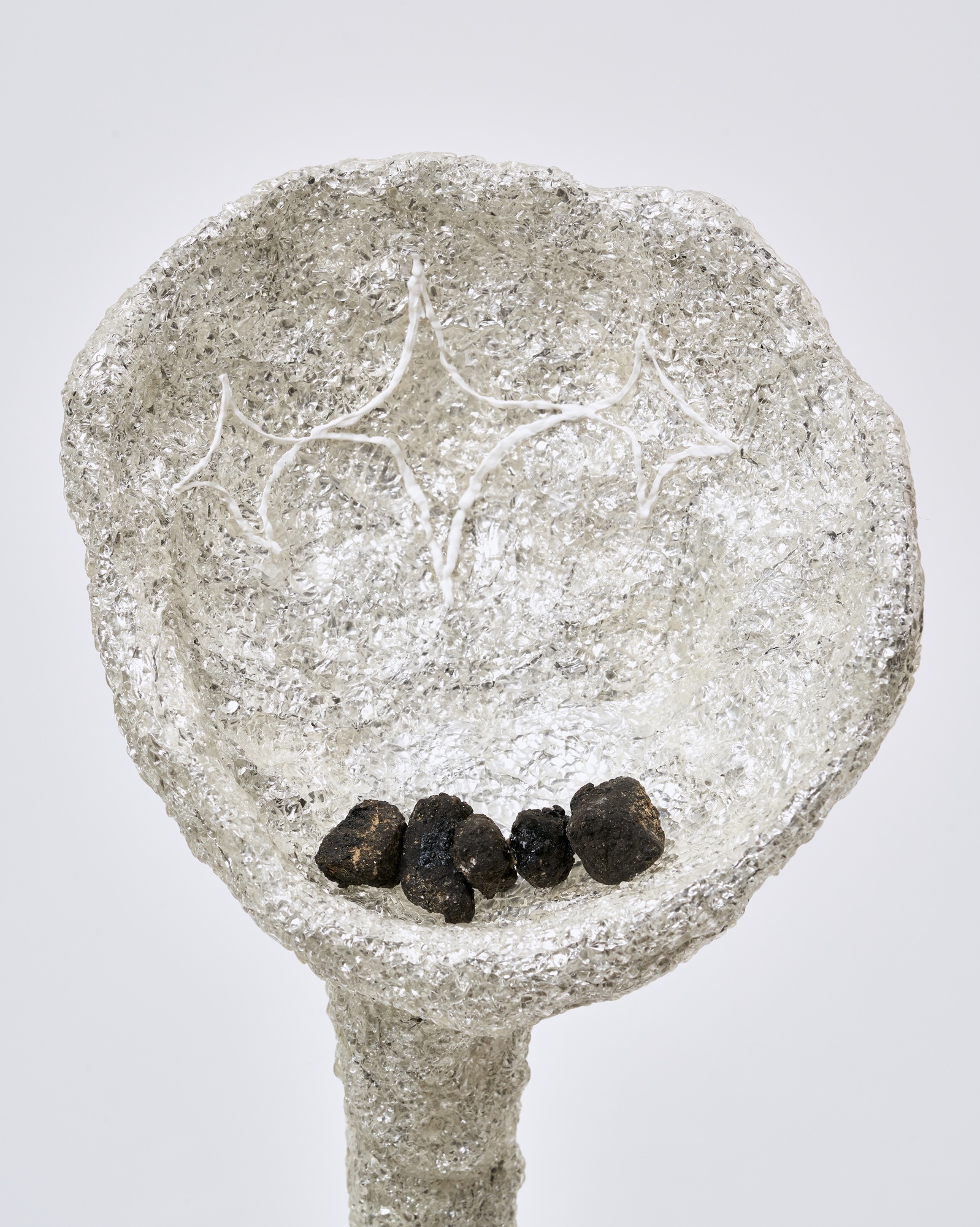
Heewon Choi’s work resists being categorized into drawing, painting, or sculpture; rather, it might be more accurate to consider all of it as drawing. Quoting the arguments of Kim Seung-ho referenced earlier, the artist’s work unfolds not toward an “artwork” as a fixed result but as a pervasive manifestation of drawing, where essence and attitude remain equally present from inception to completion, without any ranked importance. The artist internalizes lines and shapes intuitively drawn to patterns on building facades, natural motifs in leaves, and the irregular forms of grilles or railings. These impressions, repeatedly sensed and absorbed, are later released in their work. Often, the central focus of their sculptural process is to create sculptures that can “stand on their own.” This desire may stems, in part, from a preference for works that possess a front, back, and both sides. To achieve this, the artist selects materials such as wood, thread, papier-mâché, plaster, wire, or stone—substances already strong or capable of being fortified through a small or big intervention. The artist builds and lays these materials, almost nurturing their inherent potential, delighting in the process as the imagined image gradually rises, forming its spine and standing independently on its own. The artist’s repeated choice of materials that must be touched, handled, and physically engaged with to be deeply understood and skillfully manipulated reflects an effort to fully sense and connect with the world. The artist has narrowed the distance to their subjects as much through touch and tactile engagement as through observation. This approach to sculpture often lends their creations a distinctive sense of raw individuality and completeness. The artist’s works possess a remarkable ability to express their inherent meaning with independence, relying little on external support such as a screen, a backdrop, a pedestal, or the context of the space. Beauty, irregularity, strangeness, awkwardness, wit, tenderness, intricacy, precariousness, strength, freedom—all these, along with the many emotions and intentions the artist has projected, come alive and stand within the work.
Seemingly dedicated to different mediums, the four artists share significant commonalities in their approach. They move away from the familiar, the refined, and the mastered, carving out new paths as they continuously refine their goals. They remain wary of external aids and supports, instead leaning into the energy and resources generated within themselves. They embark on countless beginnings in pursuit of their own vision. In this process, drawing emerges as motivation, bridge, and destination.
콤플렉스 개관전 《구부러지는 선》은 전시에 참여하는 네 작가 각각의 작업 안에서 다채로운 재료와 매체를 아우르듯 현현하는 선과 형태를 반복해서 감지하며 시작되었다. 구불거리고 주름지고, 이따금 덩어리를 이루다 때론 격자로 교차하고 주저한 듯 이어진 이 선과 형상들은 어디에서 오는가를 주요 질문 삼고 작가들과 소통을 시작했을 때, 네 사람의 작업 안에서 드로잉이 상당히 중요하며, 이때의 드로잉은 과정물이나 어디로 가기 위한 도움의 의미를 상회한다는 사실을 알게 되었다. 김승호는 드로잉이 내포한 정신성을 강조한 논문 「현대 미술에서 드로잉의 가치와 미학적 평가 기준(2016)」에서 “드로잉은 예술과 예술 작품 사이를 고찰하게 한다. 예술 작품은 정신 활동의 결과물인 반면에, 예술은 존재하는 것이 아닌 인간의 정신 활동에 속한다.”고 진술했다. 그는 드로잉이 고안하고 재현하고 상상하는 인간 내면 깊숙한 곳으로부터 발아하는 원초적 예술로, 여타의 모든 창작 행위를 촉발할 뿐만 아니라 창작 행위 전반에 지속적으로 ‘현현’하는 창작자의 정신임을 강조한다. 이 전시는 위와 같은 주장에 일시적으로 기대어, 작가의 작업을 관통하는 본성과 습관, 사고, 의지, 태도의 조형적 생김새를 탐구하는 데 목표를 둔다.
박노완 작가는 추상 회화를 출품한다. 작가는 바라본 대상이 있는 구상 회화 작업을 오래 이어오며 자기만의 회화적 언어를 구축하고 연마해왔다. 추상 회화는 변한 적 없는 목표를 향해 취한 새 보법과도 같았다. 지시하는 대상이 다소 선명히 읽히는 그리기에 매진할 때에도, 수채 물감과 아라비아 고무액을 혼합해 쌓아올리는 작가 특유의 표면 위에서 대상은 종종 본래의 맥락과 단절되곤 했지만, 작가는 그럼에도 자기의 그림이 늘 어떤 ‘대상’과의 관계 안에서 형성되고 존재한다는 사실에서 외면하기 어려운 수동성을 느낀 듯하다. 이에 작가는 자기 스스로 존립하는 회화를 이룩해보기 위해 대상을 배제하기로 결단했고, 이후 내 그림에 남는 게 무엇인지를 치열하게 묻는 긴 시간을 보냈다. 만나본 적 없는 새로움이 태어나는 화면을 기다린다는 건 무수히 긋고 지우고 얹고 문지르는 지난함을 의미했다. 종이 위에 올려본 선과 형상을 캔버스로 옮기며 오래 눈에 익은 형태와 색을 계속 소거했다. 가다가 닦여 사그라지나 싶다 어느 시점에 옆선과 만나고 다시 헤어지는, 끊어질 줄 알았는데 마침내 면을 가르고 형상을 이루는 그의 무수한 선들은 그리는 행위에 대한, 그리는 나 자신에 대한, 회화에 대한 쉬이 절연되지 않는 열망을 투과한다.
문규화 작가의 출품작들은 작가가 자신의 감정과 생각을 반추하고 응시하며 몇 달간 천착해온 회화 연작의 일부이다. 「물도 따뜻해(2023)」는 어느 날 길을 걸으며 쐬었던 뙤약볕을 향한 미움을, 「(2024)」은 마음에 돈은 날카로움을, 「길이 어디 있어(2023)」는 ‘정답’으로 일컬어지는 길들에 대한 저항감을, 「각자의 밝음(2023)」은 공평하게 내리쬐는 듯한 볕 아래에서도 어떤 이는 증발하지 않는 어두움을 감지할 수 있음을 조형해본 회화들이다. 이 연작에 매진하며 작가는 부단히 자기에게로 걸어 들어갔다. 으레 바깥에서 그림의 대상을 만나곤 하던 관성을 돌이켜 나에게서 연유하는 그림을 그려보려 했을 때, 드로잉은 출입문이 되어주었다. 최근 작가는 겪은 것, 본 것, 느낀 것, 생각한 것을 글로 기록한다. 이때 ‘말’이 태어나는데, 이는 나를 적확히 표현하고 내게 남겨진 감정과 생각을 갈무리짓는 단어나 문장이다(이 단계에서 종종 작품의 제목이 탄생한다). 태어난 말을 상기하며 드로잉을 한 후 작업실로 가 이 그림이 가질 표면의 질감과 두께, 색의 구성과 밀도, 선과 형상의 흐름을 결정한다. 작가는 이에 더해, 오래 안주하던 특정 색군을 떠났다. 편히 여기던 색을 배제했을 때 내 회화가 생존할 수 있을지를 시험하는 태도로, 그간 도외시하던 생경한 색에 다가섰다. 작심하고 감행한 적극적 결핍과 진일보를 향한 갈망 끝에, 작가는 주제와 방법, 두 방면 모두에서 내게 자연스러운 것, 나다운 것, 내 것이라 말할 수 있는 회화에 다가서고 있다.
이은영 작가에게 조형은 발화하는 행위이다. 사적 경험과 기억, 사회 구성원들이 함께 겪은 사건, 상기가 필요하다 여기는 현안에서 출발한 서사와 감흥과 물음이 담긴 조형적 발화. 예를 들어 2층에 설치된 「꺾어진 나뭇가지에서 복사꽃이 피었다(2024)」는 도시 개발의 일방적 패러다임에 대한 작가의 조형적 대응으로, 작가는 이주와 철거가 일상인 청주 원도심을 방문해 스러져가는 길과 담, 벽과 창을 보고 만지며 조각의 구부러지는 선과 울퉁불퉁한 표면을 상상했다. 작가는 자기의 발화가 찌르듯 뻗기보다 에둘러 둥그렇게 건네는 어투를 구사하길 바라며 은유하고 함축한다. 작가가 만난 사건과 이야기는 작가를 통과하며 ‘생략’과 ‘집약’, ‘연쇄’와 ‘중첩’ 등 조형적 개념으로 은유되어, 깊이 패이거나 주름지고 한쪽으로 쏠리거나 돌출되고, 스며드는 색과 굽이치는 선으로 조각되어 벽에 걸리고 바로 선다. 이 가운데 ‘드로잉’은 어쩌면 작가가 가닿고자 하는 조형의 궁극적 목표로, 오랜 훈련을 통해 체득된 ‘조형적’ 유능함을 오히려 일정 선까지 소거하고 소거해야만 마침내 성취할 수 있을, 자기 안에서 이룩된 원초적 선과 형태이자 나의 현현한 본성이다. 이를 위해 작가는 시작점과 마침점에 대한 고정적 패턴 없이 드로잉과 조각 사이를 오간다. 드로잉으로 시작해 조각으로, 조각을 하다 다시 드로잉으로 가고 오는 동안 둘은 서로를 향한 동기를 연쇄적으로 제공하며 매체 간의 유연한 사잇길을 조형해나간다. 흙에 흙을 덧대어 선을 연장하고 형상을 발생시키며 조각이 드로잉되는 동안, 작가의 작업은 무엇이 먼저라 명시하기 어렵고 드로잉과 그것이 아닌 작업의 경계가 스러지는 길로 나아가고 있다.
최희원 작가의 작업은 드로잉, 회화, 조각 등으로 구태여 부류를 나누지 않는 편이, 오히려 모두 드로잉이라 부르는 편이 적확할지 모른다. 앞서 참조했던 김승호의 논지를 빌려 말하면, 작가의 작업은 ‘결과’로서의 ‘예술 작품’을 향해 전개되기보단 본성과 태도가 시작부터 ‘완결’까지 경중 없이 현현한, 드로잉의 만연이다. 작가는 건물 외벽의 문양이나 잎사귀의 자연적 패턴, 창살이나 난간의 비정형적 생김새 등 끌리듯 반복적으로 감지되는 선과 형태를 내면화해 두었다가 작업 안에서 발산하는데, 많은 경우 조형의 주안점은 혼자 설 수 있게 ‘만드는 것’이다. 이 욕구는 아마 앞과 뒤, 양옆을 가진 작품에 대한 선호에서 일부 연유할 것인데, 이를 위해 작가는 나무나 실, 종이죽, 석고, 철사, 돌 등 이미 단단하거나 크고 작은 개입을 통해 견고해질 역량을 가진 재료를 집어들어 그 역량을 키우듯, 쌓듯이 축조해 자기가 상상한 이미지가 서서히 척추를 세우고 자립하듯 구현되는 과정을 즐거이 지난다. 손으로 만져야만, 몸과 부대껴야만 깊이 이해할 수 있고 쉬이 다룰 수 있는 재료를 계속해서 집어드는 것은 작가가 세계를 온전히 감각하는 노력의 일환이기도 하다. 작가는 보는 행위만큼이나 만지고 촉각하는 행위를 통해 대상과의 거리를 좁혀왔기 때문이다. 조형을 향한 이 같은 태도는 창작물에 다소 생경한 주체성과 완결성을 드리우는 결과를 초래한다. 작가의 작품들은 주로 무엇의 도움 없이, 화면이나 올라설 받침이나 공간의 맥락에 크게 기대지 않고서도 자기가 내포한 것을 상당히 독립적으로 표출하는 기지를 갖춘다. 아름다움, 울퉁불퉁함, 이상함, 어색함, 재치, 다정함, 세밀함, 위태함, 굳건함, 자유로움, 또 작가가 투영한 모든 많은 마음과 의지가 그 안에서 일어선다.
각기 다른 매체에 전념하는 듯 보이나, 네 명의 작가는 적지 않은 공통의 태도를 지녔다. 익숙한 것, 정제된 것, 숙련된 것으로부터 떠나 새로 길을 닦으며 부단히 목표를 세공하는 태도, 외부로부터 유입되는 갖가지 보조와 지지를 경계하며 자기 내부에서 발생하는 동력과 자원으로 몸을 기울이는 태도, 자기의 것을 향해 무수한 출발을 감행하는 태도. 이 가운데 드로잉은 동기이고 다리이고 목적이 되고 있다.